 Claim Here!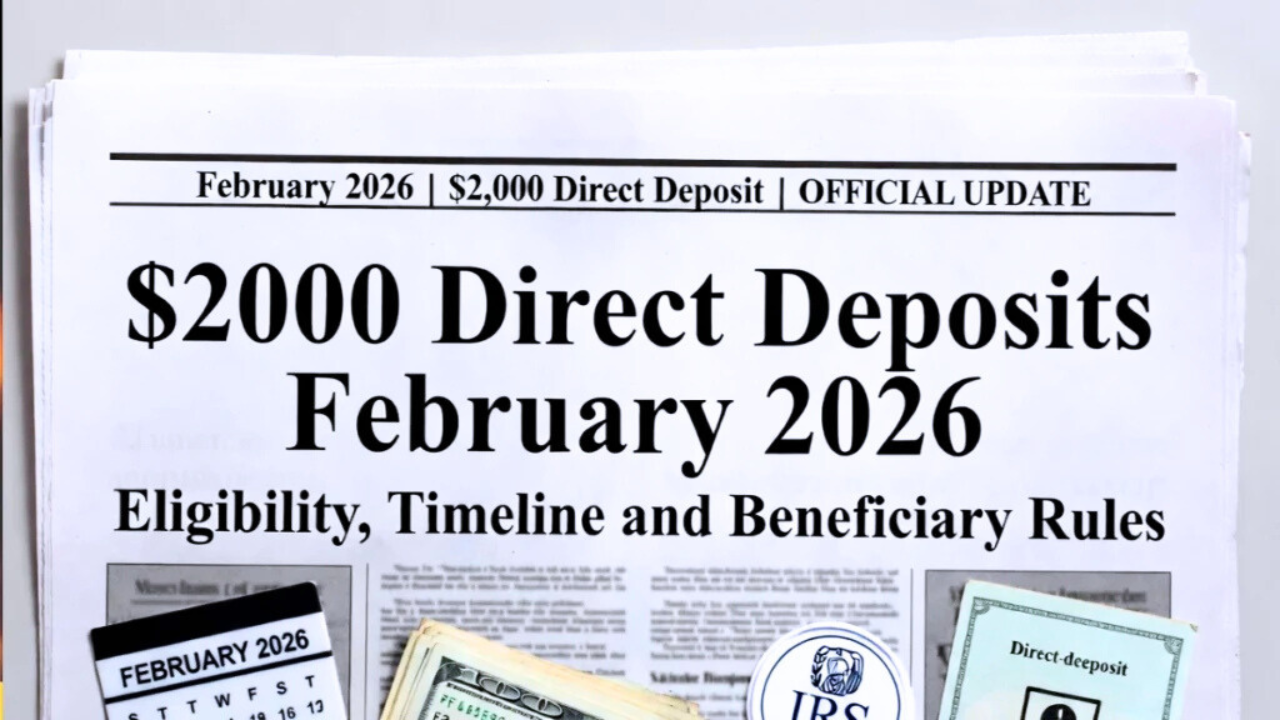
As January 2026 approaches, social media is once again buzzing with claims that the Internal Revenue Service (IRS) has approved a $2,000 direct deposit for all Americans. For families managing bills, debt, and rising living costs, the news sounds like welcome relief.
But here’s the reality: there is no official IRS announcement confirming a nationwide $2,000 payment.

Let’s break down where this rumor comes from, who actually gets IRS deposits in January, and what taxpayers should really expect.
Where the $2,000 Payment Rumor Comes From
Every year, the same misunderstanding spreads during tax season.
How the confusion starts
- Tax filing season opens in January
- Employers send W-2 forms
- Early filers submit returns quickly
- Some people receive refunds fast
When refunds hit bank accounts, screenshots circulate online. If a few deposits happen to be around $2,000, people assume it’s a government program — but it’s not.
Why So Many Refunds Are Close to $2,000

There is no fixed refund amount in U.S. tax law.
Refunds depend on:
- Total income earned
- Taxes withheld during the year
- Tax credits claimed
- Filing status and dependents
Why $2,000 appears often
Many workers slightly overpay taxes all year. When that money is returned — along with common credits — totals can land near $2,000. That’s math, not policy.
| Person A | Person B | Person C |
|---|---|---|
| $1,350 refund | $2,045 refund | $3,200 refund |
Each amount is personal — not a shared program.
Tax Refund vs. Stimulus Payment
This is where many people get confused.
Tax Refund
- Your own overpaid tax money returned
- Only happens after filing a return
- Amount varies for everyone
Stimulus Payment
- Emergency government relief
- Requires new legislation
- Publicly announced
No new stimulus law has been passed for January 2026.
Who Usually Gets Refunds Early?
Some taxpayers do see faster deposits — but it’s due to filing details, not special programs.
Faster refunds often go to:
- People with simple tax returns
- Workers with only W-2 income
- Those who choose direct deposit
- Accurate, error-free filings
Slower refunds often involve:
- Self-employment or gig income
- Missing documents
- Identity verification checks
- Tax credits that require extra review
Risks of Believing the $2,000 Rumor
Relying on unconfirmed payments can create real problems.
Financial risks include:
- Delaying bill payments
- Taking on unnecessary debt
- Budgeting based on money that never comes
Even valid refunds can be delayed due to fraud checks or processing backlogs.
What to Expect in January 2026
Here’s what is actually happening:
- Tax filing season opens
- Refunds are issued normally
- Timing varies by individual return
- No universal $2,000 deposit exists
The IRS focuses on accuracy and identity protection, which can slow processing but helps prevent fraud.
FAQs
1. Is the IRS sending everyone $2,000 in January 2026?
No. There is no official program or announcement confirming this.
2. Why are people posting $2,000 deposits online?
They are personal tax refunds, not government payments.
3. Can I get money from the IRS in January?
Yes — but only if you file a tax return and qualify for a refund.
4. Is this a new stimulus check?
No. Stimulus payments require new laws, and none have been passed.
5. How can I know if a payment is real?
Only trust official IRS announcements and government websites.
Final Thoughts
The idea of a $2,000 IRS direct deposit for everyone is a recurring rumor — not a real program. What people are seeing are normal tax refunds, which differ for every taxpayer.
To avoid confusion and financial stress, rely on verified IRS information and plan your finances based on confirmed income, not social media claims.