 Claim Here!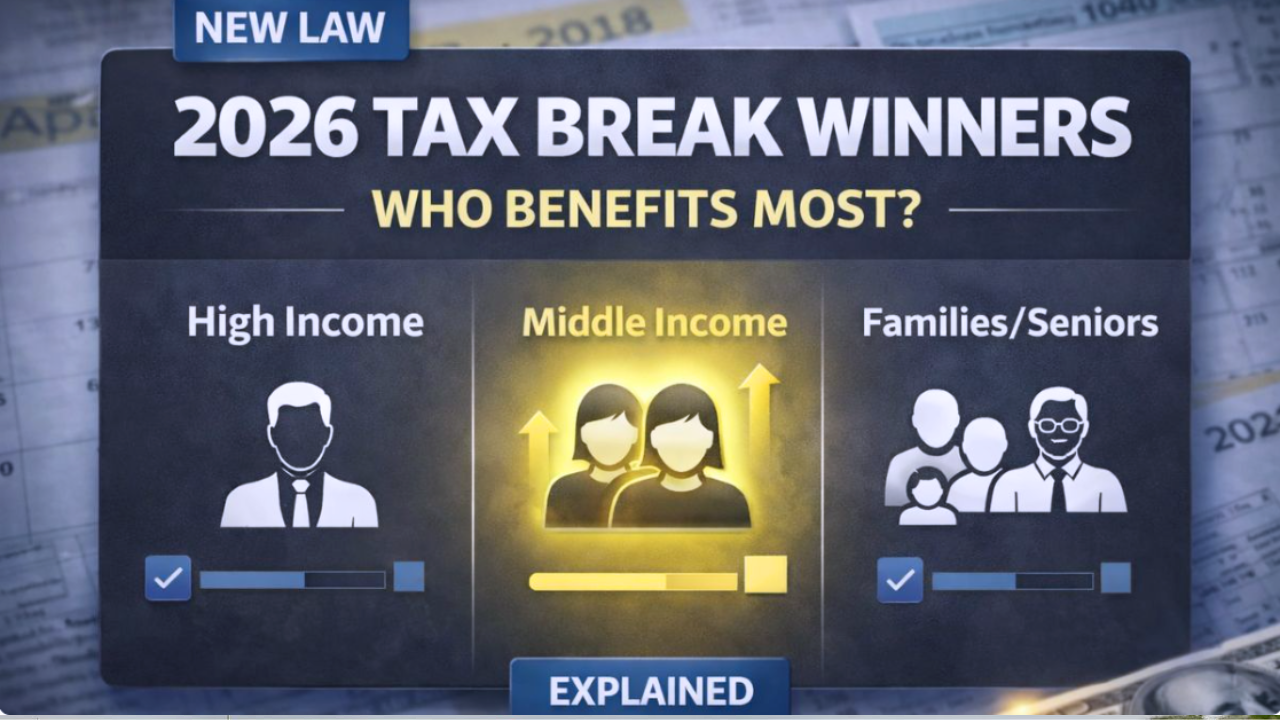
The 2026 tax year introduces major updates under a new federal tax law that extends earlier tax cuts and adds new deductions. While many Americans will see some level of relief, the benefits are not distributed evenly. The structure of deductions, credits, and expanded limits means some income groups are positioned to gain more than others.
Understanding who benefits most can help taxpayers plan smarter before filing with the Internal Revenue Service.
What’s Changing in 2026

Several tax provisions are being extended or expanded, bringing more stability to long-term tax planning.
Key updates include
- Inflation-adjusted Child Tax Credit
- Extra deduction for many seniors
- Charitable deduction available to non-itemizers
- Higher income thresholds and deduction limits
These changes reduce taxable income for qualifying households, but how much each family saves depends largely on income level and filing situation.
Why Higher-Income Households Gain the Most
Tax analysts widely expect higher-income taxpayers to receive the largest overall dollar savings.
Main reasons
1. Deductions Are Worth More in Higher Tax Brackets

Deductions reduce taxable income, not taxes directly. For someone in a high bracket, each dollar deducted saves more tax than it does for someone in a lower bracket.
2. Itemizing Works in Their Favor
Higher-income households are more likely to itemize deductions instead of taking the standard deduction. Itemizing allows them to claim:
- State and local taxes
- Mortgage interest
- Charitable contributions
When deduction limits are raised, these filers benefit the most.
The Expanded SALT Deduction Effect

One of the biggest changes is the higher cap on the State and Local Tax (SALT) deduction.
Why this matters
- Helps homeowners in high-tax states
- Benefits those paying large property and income taxes
- Most useful to higher earners who itemize
Lower-income households generally pay less in state and local taxes and often use the standard deduction, so they gain less from this provision.
What Middle-Income Families Can Expect
Middle-income households still benefit, but usually in smaller amounts.
Typical advantages
- Larger standard deduction
- Child-related tax benefits
- Some access to new deductions
However, many credits and deductions phase out as income rises. That limits how much middle earners can claim compared to higher-income itemizers.
Impact on Lower-Income Households
Lower-income families may see modest gains, mainly through credits rather than deductions.
Important factors
- Credits often have income limits
- Tax bills may already be low, limiting savings
- Standard deduction increases help but have smaller dollar impact
These households are not excluded, but the structure of tax breaks naturally produces smaller reductions.
Seniors and Charitable Donors Still Benefit
Not all changes favor high earners.
Helpful provisions
- Extra deduction for many seniors
- Above-the-line charitable deduction for non-itemizers
These allow older taxpayers and standard-deduction filers to reduce taxable income even without itemizing.
What This Means for Tax Planning
Taxpayers should prepare early for the 2026 filing season.
Smart planning steps
- Check eligibility for new deductions
- Review income phaseout limits
- Adjust paycheck withholding
- Track charitable donations
- Seniors should confirm eligibility for extra deductions
Professional advice may help uncover benefits that are easy to miss.
FAQs
Which group benefits the most overall?
Higher-income households receive the largest total dollar savings.
Do middle-income families still benefit?
Yes, mainly through the standard deduction and family-related credits.
Why do deductions help high earners more?
Because deductions are worth more in higher tax brackets.
What is the SALT deduction change?
The cap on state and local tax deductions has been raised, benefiting itemizers.
Should taxpayers change their withholding?
Possibly, to avoid underpaying or overpaying during the year.
Conclusion
While the 2026 tax law offers relief across income levels, higher-income households are positioned to gain the most due to expanded deductions and itemizing advantages. Middle- and lower-income families still benefit, but generally in smaller amounts. Careful planning and awareness of eligibility rules can help taxpayers make the most of the new tax landscape.